
You don’t have a time problem. You have an adding problem.
You didn’t sit down one day and decide ‘I’m going to add more to my life (or business) than is sane.’ It happened bit by bit.
Each chunk was set into place to alleviate something or to make things better, faster or easier.
We all get caught in it because we’re taught to solve by adding. Adding is what got you where you are now – it’s also what’s keeping you stuck.
Right now, I’m noticing it in our podcast.
Stephanie and I have been talking about what our podcast will look like in 2027- what needs to change, what needs to stay the same, etc. A lot of the discussion circles the substantial workflow that’s evolved.

We started with recording and publishing in 2021. We added all the things – clips, transcripts, a newsletter, social posts, guests, multiple platforms, etc. This year we counted -one episode now takes 23 steps and four people.
A simple ‘record and publish’ took on a life of its own.
You have a similar story of ever-increasing workflow – which is less about the workflow itself and more about how much of you is buried in all the pieces.
Because adding is our modus operandi.
The Study
“People systematically default to searching for additive transformations,” according to the authors of the study People Systematically Overlook Subtractive Changes, published in Nature in 2021.
The study showed that people rarely look at something (situation, object or idea) that needs improving and think to remove something as a solution, especially when they are stressed and overloaded.
Most often people add an element, whether it helps or not.
- Plateaued? Add another training block.
- Creatively stuck? Add another project.
- Team overwhelmed? Add another hire.
- Promotion feeling flat? Add a platform.
- Guest outreach a mess? Add another system.
The thing is that each addition seems reasonable at the time. That’s what makes it invisible.
It just accumulates.
“It happens in engineering design,” said one of the authors, Leidy Klotz. “It also happens in writing, cooking and everything else… The first thing that comes to our minds is, what can we add to make it better… Even with financial incentive, we still don’t think to take away.”
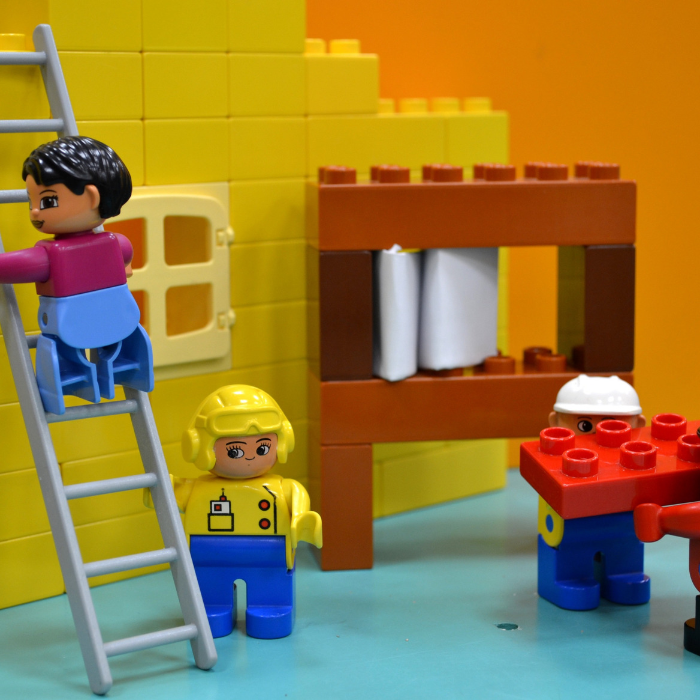
In the study people were asked to stabilize a Lego structure. Most people defaulted to purchasing and adding a block at each corner, rather than removing the existing block (a free option) to allow the platform to rest on the layer below.
Across eight experiments with varied tasks, people consistently reached for something to add far more often than they considered removing something.
Co-author Gabrielle Adams says there’s a self-reinforcing element to it: “The more often people rely on additive strategies, the more cognitively accessible they become.”
“Subtractive ideas require more cognitive effort,” according to Benjamin Converse, another author of the study. And there’s good news: just being prompted to think about subtraction opens new neural networks and creates alternative options.
The Process
So here’s your prompt.
Before you add anything else, run what you already do through three questions. (This is what Stephanie and I are doing with our podcast workflows right now.) Remember to look at both the whole and the parts.
1. Keep. Is it working? Whatever’s working, leave it be. It might not make big money or bring in obvious clients. It might provide proof of your expertise, protect a relationship, or be the part you actually love.
Asking this question clarifies why it’s there and stops the constant mind chatter that questions it.
For us, the podcast itself is working, so we’re looking at each part with the next two questions.
2. Tweak. Is it working but costing you focus? Yes, it’s working, yet there are sticking points: each task has a ramp up time, or it keeps pulling you out of everything else. Things like client follow-ups, numbers, writing descriptions, social posts, etc., can do this.
Group them as much as possible and set aside time to work with them in one sitting. The task stays. You stop being interrupted by it five times a week.
For us, creating and posting social content and responding to the awesome comments and emails that come in can shred a day. Batching allowed me to take an hour a day and consolidate it into two hours twice a week. Yes, it seems like it only gave me one hour, yet the mind space that it opened was the unexpected bonus. I don’t worry about responding anymore; I know exactly when it will be handled, so I can let it go.
3. Stop. Is it broken, breaking or dying a slow death? The impulse is to fix it, to find a faster way to do it. Instead, go the opposite route. Try stopping it and see what happens. From there you can restore it, simplify it, or leave it stopped.
Three clips become one. Five platforms become two. A six-email sequence becomes one thoughtful note. Or nothing happens at all, which may seem scary and might be the most useful answer you’ll get. Only after that do you look at a new tool.
For us, right now, it’s the platform game. We pay for multiple platforms that overlap, and more options seem to pop up daily. We continue with what we have because it’s comfortable, not because we really need all of them.

The Elite
Does it take effort to stop and look a bit closer? Yes.
Does the ‘what if’ demon poke its head into our conversations? Absolutely.
Adding feels like progress. It leaves evidence we can point at. It can also create congestion and complacency.

For high achievers, cutting something feels like losing ground. Yet top athletes do it deliberately -they cut training before a big competition to perform better. Subtraction is something elite performers do, not a sign of giving up.
Subtraction leaves space, and space is where the next version of your life actually gets built.
So Stephanie and I are choosing to invest some time this month in making space for the next version of our podcast, and we’ll let you know the results of cutting our platforms.
What about you?
Send me a note and tell me one thing you’re going to pause this week.
“The first thing that comes to our minds is, what can we add to make it better… Even with financial incentive, we still don’t think to take away.”
— Leidy Klotz
Do you feel the constant need to do? These two episodes will help you see, and embody, different truths:
- Are you the reliable one living “busy = being worth something?”, listen to Ep 218 (The Leadership Issue That Keeps You Stuck)
- The reality about a culture that rewards nonstop doing Ep 208 (When Pushing Harder Makes Everything Worse)
Listen to The Soulful Leader Podcast on all podcast platforms including YouTube
Did this content resonate with you?
Join our email list. 📨 We send 1-2 emails per week designed to help you take your life to the next level.
🙌 We are real people – not AI bots.
We never spam and always want to hear from you. Please connect and let us know how we can serve you better.
You can find us @soullfulleaders on LinkedIn, Facebook, YouTube and now on Pinterest.